

Where the impact standard began
Impact Windows & Doors in Miami, Florida
Miami-Dade wrote the book on impact standards: its product approvals set the bar the industry follows. We install systems that meet that bar, documented opening by opening.
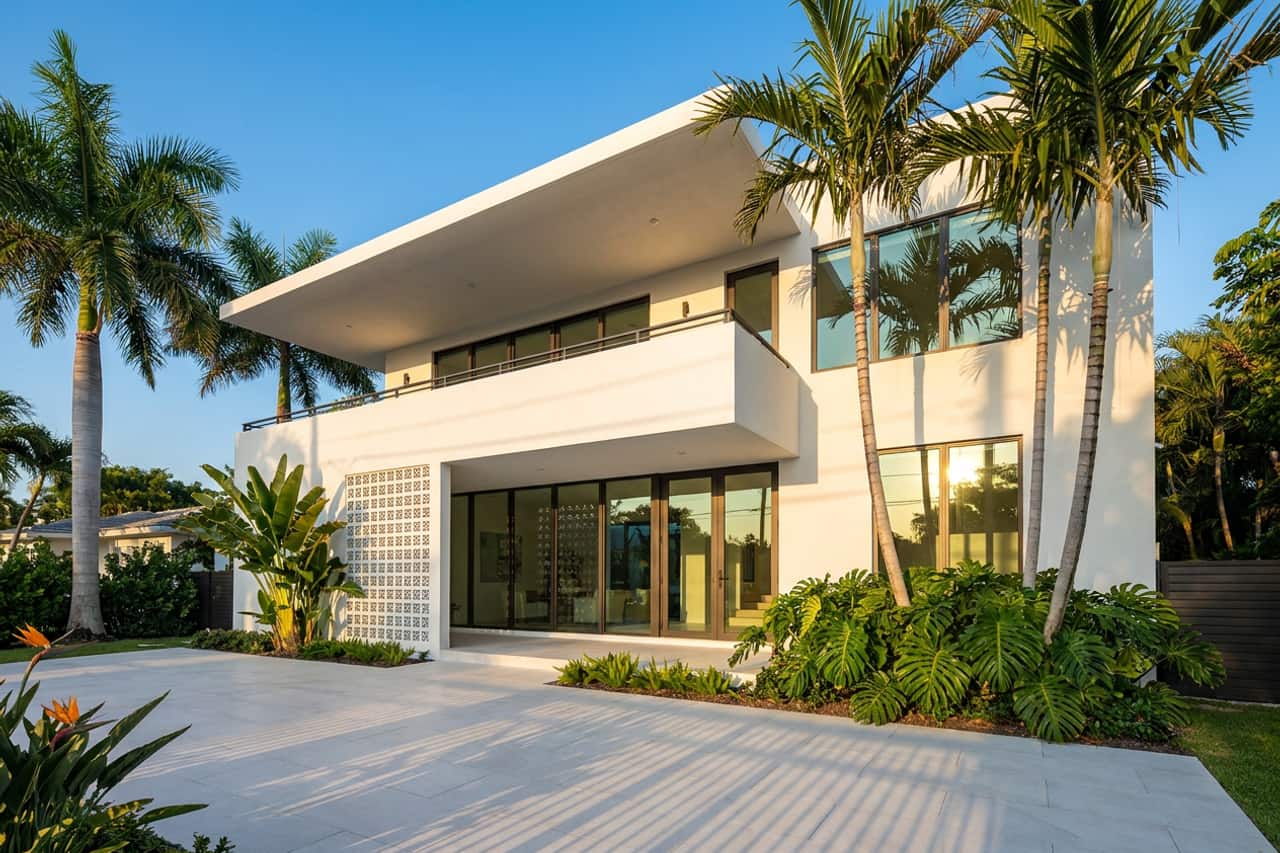
Working in Miami
What we see in Miami homes.
Miami-Dade County’s product-approval system is the most recognized name in impact protection: “Miami-Dade approved” became shorthand for the toughest standard precisely because this county pioneered it. Working here means working to that standard, with the documentation to prove it.
Miami’s housing runs from single-family neighborhoods to dense condo living, and the right answer differs by building type. For houses, we spec approved systems opening by opening; for condo units, we coordinate association requirements and building logistics as part of the job.
Miami-Dade is where the Notice of Acceptance came from, and it still runs the approval system the rest of Florida borrows. A product carries an NOA because this county tested and accepted it, and every replacement window, glass door or mullion on a permit here needs the current NOA for that exact product: not a brand name, not a series, the document.
The county’s own submittal asks for something Broward and Palm Beach do not: a frontal elevation view of each exterior wall where windows or glass doors are being replaced, showing the location and size of each opening and the product approval number covering it. It is a drawing of your house from outside, wall by wall. There is a filing convention behind it too: all pages belonging to one NOA are grouped into a single PDF, cover pages and installation details together, with no isolated pages submitted on their own.
Permit categories are specific: replacement windows, mullions and glass doors go in under one category, exterior doors with no glass under another, and shutters under a third depending on whether they are removable or permanent. Getting that right at submittal is the difference between a permit that moves and one that comes back.
Code context for Miami-Dade County
This county sits in Florida’s High-Velocity Hurricane Zone (HVHZ), the strictest wind-borne debris standard in the Florida Building Code. Products installed here must carry the appropriate HVHZ approvals, and we confirm the exact approval documents for your openings before anything is ordered.
Coverage at a glance
Where Miami sits in our service corridor.
-
Treasure Coast Wind-borne debris region
4 cities served
-
Palm Beach County Wind-borne debris region
7 cities served
-
Broward County HVHZ
4 cities served
-
Miami-Dade County HVHZ
- Miami
- Coral Gables
- Aventura
- Homestead
Our East Coast service corridor from the Treasure Coast down to Miami-Dade, shown north to south. This is a coverage diagram, not a scale map. HVHZ marks Florida's High-Velocity Hurricane Zone counties; everywhere else we serve falls in the wind-borne debris region.
Available in Miami
Three systems, one measured process.
-
Impact Windows
Custom-fit impact windows that calm outside noise, ease the load on your A/C, and stand ready when the weather turns. No shutters to wrestle.
Explore impact windows -
Impact Doors
Sliding, French, and entry doors engineered for daily ease and storm-season strength, fitted with weather-tight precision.
Explore impact doors -
Patio Enclosures
Turn a porch or lanai into a year-round room with impact-rated glass and framing that matches your home’s lines.
Explore patio enclosures
Miami questions
Asked by Miami homeowners
What does “Miami-Dade approved” actually mean?
Miami-Dade County operates its own rigorous product-approval process for the High-Velocity Hurricane Zone, and its approvals are the most widely recognized benchmark in the industry. Products we install in Miami carry the appropriate approvals for their use, documented on your quote.
Is a condo unit project different from a house project?
Yes, mostly in coordination: associations typically have documentation and appearance requirements, and buildings have access rules. We handle that coordination routinely, alongside the same measurement and installation care a house gets.
Do you handle City of Miami permitting?
Yes. Permitting and inspections are part of every installation, and the paperwork discipline HVHZ jurisdictions require is where our process pays off.
Will impact glass tame city noise?
That’s one of the first things Miami homeowners notice. Laminated impact glass meaningfully reduces traffic and street noise compared to older glass. The home simply feels calmer.
What exactly is an NOA, and why does Miami keep asking for it?
A Notice of Acceptance is Miami-Dade County’s own product approval: the county tests and accepts a specific product, and the NOA is the document proving it. Because this county originated the standard, the requirement here is strict and literal: the current NOA for each window, glass door or mullion actually being installed, submitted complete with its cover pages and installation details. We name the product and its approval on every line of your quote for exactly that reason.
Do you need drawings of my house?
Yes, more than elsewhere. Miami-Dade asks for a frontal elevation view of each exterior wall where openings are being replaced, showing where each opening sits, how big it is, and which product approval number covers it. We produce those as part of the permit package; you do not need to supply anything.
Also serving nearby
Protect your Miami home.
Free on-site estimates across Miami-Dade County: precise measurements, clear options, and a written quote. Or call (561) 523-6010.